
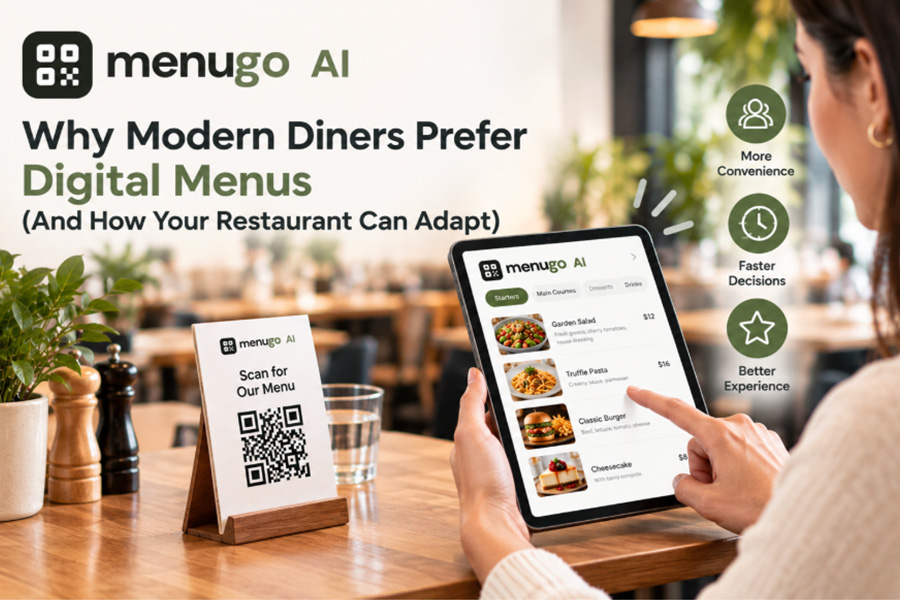
The customer arrives, sits down at a table, scans the QR code, and starts browsing They can see prices, food photos, and the menu without having to wait for a server.
That is one reason why a digital menu for restaurants has become an important ingredient in the dining experience. This serves a dual purpose of empowering customers while allowing restaurants to maintain agile and manageable menus.
But the question is, are digital menus just a fad? Here is why they love them − and how you can leverage customer preference to improve restaurant service.
-
Diners Want More Control
Decision-making is time-consuming. People prefer to do it at their own pace. Some folks demand to read every. single description. Others have an idea of what they want, and return ready to place their order.
A digital menu offers both categories of customers an opportunity to peruse without being pressurized. They can browse at their leisure, calling for a server when they want one.
How to Adapt: Allow customers to hit a QR code scan as soon as they sit down. Have a couple of paper menus available for guests that want them.
-
Contact-Free Browsing Feels Convenient
Not every customer wants a menu that has gone through so many hands repurposed. Another fast way is a QR code that shows the menu on their own cell phone.
This also simplifies the process of checking the menu before placing an order. Customers can thus browse through dishes, prices, and dietary requirements without having to wait for help.
How to Adapt: Put QR codes in visible places. Launchers should be a few words like scan to see our menu, for example.
-
Visual Menus Help Customers Decide
A food photo can make it easier to visualize a dish. Customer need to know what they are ordering.
Digital menu provides restaurants with a better space to showcase dishes beautifully. This gives space enough to promote your best-sellers, seasonal items, or new menu offerings without overcrowding the menu itself.
How to Adapt: Use simple photos, readable text, and concise sections. Do not put so many images that slow down the menu or turn it into a laborious task to browse through them.
-
Fresh Menus Build Trust
Customers can spot a stale menu from a mile away. Item available may be sold out. The price may now not be consistent with the bill.
Creating a digital menu for restaurants allows restaurants to manage accurate information. This allows staff to update prices, omit dishes that aren’t available, and change specials without needing to reprint every menu.
How to Adapt: Update your menu every day as a habit. Before use, see if a supplier is available and change pricing according with new supplier costs.
-
Staying Effort Means Meeting Customer Expectations
A trend is good, but not every new thing needs to be replicated by a restaurant. It straddles the line of doing what is best for diners.
This enables options to browsing more quickly, unique selections, and progressive as well. They also spare you the trouble of requiring to print a new menu each time anything changes.
How to Adapt: Start small. Place a QR code on some tables, try out the experience and probe customers for feedback.
Give Diners a Better Choice
The worst thing to do is to force everybody into a digital experience. Which offers an easily accessible choice.
Customers pay attention to the essentials − ordering and eating − when your menu is easy, up to date, and readable.